
Hybrid ship applications in maritime: A comprehensive review on technological advancements, environmental and economic analyses

Copyright © The Korean Society of Marine Engineering
This is an Open Access article distributed under the terms of the Creative Commons Attribution Non-Commercial License (http://creativecommons.org/licenses/by-nc/3.0), which permits unrestricted non-commercial use, distribution, and reproduction in any medium, provided the original work is properly cited.
Abstract
This study presents a multidisciplinary and in-depth review of hybrid propulsion technologies in maritime applications, emphasizing their technical architecture, environmental performance, and economic feasibility. As the maritime sector accelerates efforts to achieve the International Maritime Organization’s (IMO) greenhouse gas (GHG) reduction targets, hybrid systems—which integrate diesel engines with electric propulsion and battery storage—have emerged as a pivotal transitional solution. Through extensive literature analysis, technical assessment, and real-world case studies including vessels such as MF Ampere, E-Ferry Ellen, Damen RSD Tug 2513, and Havila Kystruten, the study quantifies performance benefits: fuel consumption reductions of 15–30% and emission reductions of 20–40% for CO2, NOx, and SOx. Additional advantages include reduced underwater noise, enhanced maneuverability, and improved operational efficiency. The paper further explores the integration of alternative fuels (e.g., LNG, hydrogen, ammonia), autonomous energy management systems, and port-side electrification. Comparative evaluations across vessel types confirm the scalability and suitability of hybrid propulsion for short- and mid-range maritime operations. Despite initial capital cost barriers, lifecycle analyses demonstrate favorable economic returns driven by operational savings and regulatory incentives. Concluding that hybrid propulsion technologies have moved beyond experimentation to become mature and essential for carbon-resilient maritime futures, the study highlights key directions for future research including intelligent control systems, advanced batteries, and integration with autonomous vessels.
Keywords:
Hybrid propulsion systems, Maritime decarbonization, Energy efficiency, Alternative marine fuels, IMO GHG strategy, Life cycle emission analysis, Autonomous vessels, Sustainability.1. Introduction
Maritime transport remains the backbone of global trade, accounting for approximately 80–90% of international cargo volume by tonnage. While the sector plays a vital role in sustaining the global economy, its structural dependency on fossil fuels poses serious challenges to environmental sustainability and climate targets. Conventional marine propulsion systems, primarily based on heavy fuel oil (HFO) and marine diesel oil (MDO), are responsible for significant greenhouse gas (GHG) emissions, including carbon dioxide (CO2), nitrogen oxides (NOₓ), sulfur oxides (SOₓ), and particulate matter. These pollutants contribute to climate change, acidification, and marine ecosystem degradation, particularly in densely trafficked coastal and port areas.
In response to these environmental concerns, the International Maritime Organization (IMO) introduced the Revised GHG Strategy in 2023, committing to achieve net-zero GHG emissions from international shipping by or around 2050. This strategy also sets interim reduction goals of at least 20% by 2030 and 70% by 2040, compared to 2008 levels. In addition, mandatory regulatory tools such as the Energy Efficiency Existing Ship Index (EEXI) and the Carbon Intensity Indicator (CII), effective from 2023 under MARPOL Annex VI, require vessels to demonstrate ongoing improvements in fuel efficiency and emission performance.
Parallel to these global measures, regional initiatives such as the European Union Emissions Trading System (EU ETS)—which includes maritime transport as of January 2024—further emphasize the sector’s shift toward decarbonization. Furthermore, countries like Norway have introduced national policies mandating zero-emission operations in environmentally sensitive fjords by 2026, accelerating the adoption of low- and zero-emission propulsion systems.
Amid this evolving regulatory and technological landscape, hybrid marine propulsion systems—which integrate conventional diesel generators with battery-based electric propulsion—have emerged as a promising transitional solution. These systems offer a synergistic balance between energy efficiency, emission reduction, and operational reliability. By enabling partial or full-electric operation during low-speed maneuvers, port stays, or eco-sensitive zones, hybrid systems can significantly reduce fuel consumption and pollutant discharge while lowering noise and vibration levels onboard.
This study aims to provide a comprehensive analysis of hybrid propulsion technologies in the maritime sector. It evaluates their technical configurations, environmental performance, economic feasibility, and implementation challenges across different vessel types. Drawing upon recent case studies, empirical data, and regulatory developments, the research explores how hybrid systems can facilitate a more sustainable and economically resilient transformation of global shipping. The findings support the premise that hybrid propulsion represents not only a response to current regulatory requirements but also a strategic component of long-term maritime decarbonization pathways.
2. Literature Review and Fundamental Concepts
The transition toward a low-carbon maritime sector has emerged as a critical priority in response to growing environmental concerns and international regulatory mandates. The IMO's Revised Greenhouse Gas Strategy (2023), targeting net-zero emissions by approximately 2050, has intensified research efforts into alternative propulsion systems—particularly hybrid-electric configurations that offer a balance between operational efficiency and emissions reduction [23][11].
Recent studies have substantially expanded the discourse on maritime decarbonization. For instance, JT van den Akker [3] conducted an extensive assessment on integrating LNG propulsion, hybrid systems, and onboard carbon capture technologies, underscoring their synergistic potential to lower emissions without compromising vessel performance or economic feasibility. Similarly, Sui et al. (2020)[8] demonstrated that hybrid propulsion modes and fuel choice significantly shape voyage-wide fuel consumption and emission profiles. Their findings show that PTI operation reduces NOx and hydrocarbon emissions during close-to-port maneuvers, while LNG notably lowers CO2 and NOx across the full voyage, despite increasing HC. Overall, integrating hybrid propulsion, LNG, and mission-profile optimization yields clear improvements in total fuel use and emission performance.
Further evidence from the Fourth IMO GHG Study [8] reveals that maritime activities contribute approximately 2.9% of global anthropogenic CO₂ emissions, primarily from diesel-based engines. In this context, Brynolf et al. [40] emphasized that the continued reliance on heavy fuel oil (HFO) is increasingly incompatible with international environmental obligations. Yuan at al. [48] reviews key alternative marine fuels and finds that, despite their environmental benefits, their global adoption remains limited due to technical, economic, and workforce-related challenges. It highlights the need for further life-cycle-based research to support their wider implementation.
The environmental scope of hybrid technologies extends beyond air pollution. Horizon 2020 CORDIS [38]. measured three diesel-electric hybrid ferries in hybrid mode (diesel engine powering a generator) and fully electric battery mode to assess noise emissions. Results indicate that while on-board diesel engines contribute little to underwater radiated noise, they remain a significant source of low-frequency airborne noise, highlighting the complex relationship between ship electrification and environmental noise impacts.
On the operational front, Millet, Fidan, and Öz [47] demonstrated through empirical data that operational practices. The CO2 emissions of 30 ships were calculated using the EEOI method and compared with the types of fuel used. The results show that the choice of fuel is directly related to carbon emissions; speed management and the use of low-emission fuels are recommended to improve energy efficiency and reduce environmental impact.
Yıldırım, Özbey, and Tıkız [4] provided statistical evidence linking port infrastructure and logistics planning with localized emissions, reinforcing the need for system-wide efficiency strategies encompassing both vessels and shore-side operations. Moreover, regional mechanisms such as the European Union Emissions Trading System (EU ETS)—extended to maritime transport in 2024—offer additional regulatory and financial incentives for adopting hybrid-electric solutions, particularly for intra-EU routes. Norway’s zero-emission fjord regulation (effective 2026) and the restructured NOx Fund provide further momentum in key maritime regions.
Despite this growing body of research, existing literature remains fragmented, often addressing isolated components such as battery performance, fuel type integration, or single-vessel case studies. There remains a notable gap in system-level evaluations that synthesize technological innovation with regulatory frameworks, operational considerations, and environmental impact assessments across diverse vessel categories.
This study aims to address that gap by offering an integrative review of hybrid marine propulsion systems, focusing on four key dimensions:
- • Engineering configurations and energy management architectures,
- • Quantitative environmental and economic performance metrics,
- • Alignment with evolving IMO, EU, and national policy frameworks,
- • Operational and technical challenges, including battery integration and thermal management.
By contextualizing hybrid technologies within a comprehensive regulatory, operational, and ecological framework, this study seeks to provide both scholarly insights and practical guidance for the maritime sector’s transition to sustainable propulsion systems.
2.1. Conventional Maritime Propulsion and Emission Challenges
Early studies on the environmental impact of maritime transport—particularly those from the 1990s—identified the shipping sector as a major contributor to global greenhouse gas (GHG) emissions. However, these initial investigations relied on limited datasets and lacked consideration of emerging technological alternatives. Contemporary research, particularly following the Fourth IMO GHG Study [21], offers a more comprehensive and updated understanding of the sector’s emissions profile, operational dynamics, and transition challenges.
According to the latest findings, maritime transport accounts for approximately 2.89% of global anthropogenic CO₂ emissions, primarily from fossil fuel combustion in marine diesel engines. The typical daily fuel consumption of a large container ship ranges between 150 to 250 tons, depending on vessel size, load, and operational conditions [21][13]. This fuel usage translates to an estimated 470–780 tons of CO₂ emissions per day, in addition to substantial emissions of nitrogen oxides (NOₓ) and sulfur oxides (SOₓ). These pollutants are particularly concentrated in coastal zones and port areas, intensifying their impact on human health and marine ecosystems.
Furthermore, diesel propulsion systems are thermodynamically inefficient, with considerable energy lost during the combustion and mechanical conversion processes. In high-speed operations, the emission rates increase disproportionately due to suboptimal fuel efficiency and elevated engine loads. Additionally, non-propulsion-related activities such as routine maintenance, auxiliary engine usage, and port idling contribute to the sector’s cumulative environmental footprint
Recent operational data highlight the variability of emissions across vessel types. For example, bulk carriers and tankers exhibit lower specific emissions per ton-mile compared to ro-ro vessels and cruise ships, which often maintain higher auxiliary loads and less efficient operating profiles [31].
Table 1 presents representative values for fuel consumption and emissions for a large container vessel based on post-2020 empirical datasets.

Updated fuel consumption and emission metrics for conventional ships
These updated figures reaffirm the urgent need for structural changes in maritime propulsion technologies. They also justify the global push toward low-emission alternatives, including hybrid-electric systems, liquefied natural gas (LNG), methanol, and other zero-carbon fuels, all of which are addressed in this study as viable pathways to achieving sustainable maritime operations.
2.2 Alternative Energy Solutions and Hybrid Propulsion Systems
The growing environmental awareness and the ecological damage associated with conventional diesel engines have accelerated the pursuit of alternative energy solutions in the maritime industry. In this regard, hybrid propulsion systems—integrating diesel engines with electric drive units—have emerged as a promising technological advancement aimed at enhancing energy efficiency and reducing greenhouse gas emissions. Notably, these systems can operate solely on electric power during low-speed sailing and port maneuvering, significantly decreasing harmful emissions and thereby minimizing their environmental footprint [44].
The benefits of hybrid propulsion systems are not limited to environmental performance but also extend to economic gains. A reduction in fuel consumption by approximately 20% to 30% leads to considerable savings in operational costs. Additionally, the implementation of electric motors substantially lowers onboard noise levels, which contributes to the mitigation of underwater noise pollution and its adverse effects on marine ecosystems [47]. Another noteworthy feature of hybrid systems is their energy recovery capability. During deceleration and maneuvering, the kinetic energy generated can be stored in battery systems, thereby improving overall energy efficiency through regenerative braking mechanisms.
2.3 Development of Hybrid and Electric Propulsion Systems
In parallel with the increasing emphasis on sustainability and decarbonization within the maritime sector, hybrid and electric propulsion technologies have gained significant strategic importance. These systems facilitate the combined use of conventional diesel engines and electric propulsion units, enabling dynamic energy management that leads to enhanced operational efficiency and substantial reductions in pollutant emissions. Recent studies have consistently validated the effectiveness of hybrid propulsion, particularly during low-speed sailing and maneuvering phases. For instance, Chang [5] reported that under reduced-speed conditions, hybrid configurations could deliver up to a 30% improvement in energy efficiency compared to traditional diesel-based propulsion systems. This performance advantage is particularly critical in port operations and coastal navigation, where frequent low-load maneuvers dominate the operational profile.
A prominent real-world implementation of hybrid maritime propulsion is exemplified by India’s Navy-5 project—widely acknowledged as the world’s first hybrid-electric naval combat vessel. Designed to operate entirely on electric motors during low-speed missions, this ship achieves zero-emission sailing and minimizes ecological impact in sensitive maritime zones. Moreover, integrated energy recovery systems allow for the capture and storage of kinetic energy generated during deceleration and maneuvering, thus improving total energy conversion efficiency.
The strategic integration of hybrid propulsion technologies not only contributes to mitigating greenhouse gas emissions, but also yields multifaceted operational advantages. These include lower fuel consumption, reduced acoustic footprint—thereby minimizing underwater noise pollution—and decreased mechanical wear, which collectively translate into optimized maintenance requirements and lifecycle cost savings. As such, the adoption of hybrid systems represents a critical step toward the transition to cleaner, quieter, and more energy-resilient maritime operations.
2.4 Hybrid Technologies and Energy Efficiency
Hybrid propulsion systems are designed to enhance maritime energy efficiency and reduce greenhouse gas emissions by integrating internal combustion diesel engines with electric propulsion motors. These systems enable flexible control of power generation and distribution, allowing for optimal energy use based on varying operational conditions. In particular, hybrid configurations can significantly reduce engine load and fuel consumption during low-speed operations such as maneuvering and harbor transit, leading to both environmental and operational advantages.
The core architecture of hybrid marine systems typically comprises four principal components: diesel generators, high-capacity lithium-ion battery arrays, electric propulsion motors, and an advanced Power Management System (PMS). In this configuration, the diesel generator acts as the primary energy source under high-demand conditions, while the electric motor delivers direct shaft propulsion, bypassing conventional mechanical transmission systems. Batteries function as both an auxiliary energy source and a storage medium for regenerative braking, particularly during deceleration or transient maneuvers. The PMS serves as the system’s control hub, continuously optimizing the load distribution between the generator and batteries to ensure the diesel engine operates within its optimal efficiency band—thereby lowering fuel consumption and reducing mechanical wear.
Critically, hybrid systems are capable of operating solely on electric power during low-load conditions, making them ideal for port operations, coastal navigation, and emissions-restricted zones. Their inherent flexibility also enables automatic energy source switching based on real-time load profiles, which contributes to operational cost savings. Additional advantages include reduced vibration and onboard noise levels, improving both crew comfort and environmental acoustic performance.
Figure 1 presents a comparative visual analysis of both CO₂ emissions and annual fuel consumption for vessels utilizing conventional and hybrid propulsion systems, illustrated through two distinct bar charts:
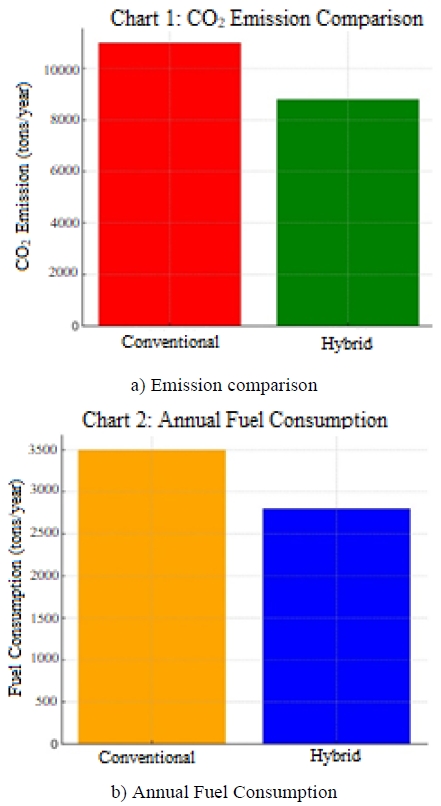
CO₂ emission comparison and annual fuel consumption (chart 1 and chart 2)
Chart 1 highlights a reduction of approximately 2,000 tons/year in CO₂ emissions when hybrid propulsion is employed, indicating a substantial improvement in environmental sustainability.
Chart 2 The data demonstrate that hybrid vessels consume around 1,300 tons less fuel annually compared to conventional systems, emphasizing enhanced operational efficiency and reduced fuel costs.
These comparative charts effectively illustrate the dual benefits of hybrid maritime technologies. The significant decrease in CO₂ emissions contributes to reduced environmental impact, while the lower fuel consumption translates into measurable economic savings. Thus, hybrid propulsion systems represent a viable and sustainable alternative for the future of marine transportation.
Table 2 summarizes the quantitative performance improvements observed in hybrid vessels compared to conventional counterparts.
Comparison of conventional and hybrid vessels in terms of fuel consumption and emissions
The data clearly demonstrate that hybrid propulsion systems contribute to both environmental sustainability and economic viability, making them a cornerstone of the maritime industry's transition toward cleaner and more efficient operations.
2.5 Contemporary Application Examples of Hybrid Propulsion Systems
In recent years, a series of pioneering vessel projects have been implemented to demonstrate the technical viability and environmental advantages of hybrid propulsion systems in maritime applications. These case studies reflect the transition toward decarbonization and enhanced energy efficiency, particularly driven by regulatory pressures and sustainability initiatives. Notably, countries in Northern Europe—such as Norway, Denmark, and the Netherlands—have emerged as leaders in the deployment of low- and zero-emission maritime technologies. Below is a concise technical overview of selected high-profile hybrid vessel applications, highlighting their system configurations and performance outcomes:
• MF Ampere (Norway):
Launched in 2015, MF Ampere is recognized as Norway’s first fully electric car and passenger ferry. It is equipped with a 1 MWh lithium-ion battery system and accommodates up to 120 vehicles and 360 passengers. The system supports rapid charging, completing a full recharge cycle in approximately 10 minutes. With an average daily operation of 34 round trips, operational reports indicate that the vessel reduces annual diesel consumption by approximately 1 million liters and CO₂ emissions by an estimated 2700 metric tons [4].
• E-Ferry Ellen (Denmark):
Developed under the European Union’s Horizon 2020 framework, the E-Ferry Ellen represents one of the most advanced all-electric ferry systems. Featuring a 4.3 MWh lithium-nickel-manganese-cobalt oxide (NMC) battery system, it offers a range of up to 22 nautical miles per charge. The vessel, which accommodates 60 vehicles and 200 passengers, avoids approximately 2000 metric tons of CO₂ emissions per annum, validating the technical feasibility of long-range electric maritime transport [36].
• Damen RSD Tug 2513 (Netherlands):
Designed by Damen Shipyards, this reversible stern drive (RSD) harbor tug utilizes a hybrid propulsion configuration integrating diesel engines with a 1 MWh battery system. It enables full-electric operation under low-load conditions and switches to diesel support during peak demand. According to performance data, the hybrid configuration has been reported to lower fuel consumption by up to 20%, with corresponding CO₂ emission reductions of approximately 400 metric tons per year, while also minimizing NOₓ and SOₓ emissions during port operations [6].
• Havila Kystruten (Norway):
This coastal passenger vessel operates with a hybrid-liquefied natural gas (LNG) and battery-electric propulsion system. It features one of the world’s largest maritime battery installations, rated at 6.1 MWh. The hybrid configuration enables fully electric, zero-emission operation during port entry, docking, and low-speed coastal navigation. The system facilitates annual CO₂ emission reductions of approximately 3000 metric tons, alongside reductions in acoustic pollution and engine maintenance [19].
• Color Hybrid (Norway):
Commissioned in 2019, the Color Hybrid is one of the largest plug-in hybrid passenger ferries globally. It services the Sandefjord (Norway) to Strömstad (Sweden) route and is powered by a 5 MWh battery system, enabling up to 12 nautical miles of emission-free operation. The vessel achieves a 33% reduction in CO₂ emissions relative to conventional ferries and complies with stringent port air quality regulations through zero-emission operation during docking and maneuvering [27].
• MS Roald Amundsen (Norway):
Operated by Hurtigruten, this expedition-class cruise vessel integrates LNG-based combustion engines with a battery energy storage system. It is specifically engineered for polar expeditions and utilizes battery-supported electric propulsion in environmentally sensitive or low-speed scenarios. This configuration contributes to reduced greenhouse gas emissions, enhanced fuel efficiency, and diminished underwater noise levels, supporting compliance with sensitive ecosystem protection protocols [18].
• SeaChange (United States):
Operating in San Francisco Bay, SeaChange is the first commercial passenger ferry powered by hydrogen fuel cells. Although it deviates from the conventional diesel-electric hybrid definition, its propulsion architecture—which combines hydrogen fuel cells with lithium battery systems—exemplifies the potential of hybrid-hydrogen energy systems. It represents a key milestone in the transition toward zero-emission maritime transport [17].
• Elektra Pushboat (Germany):
Developed through a partnership between BEHALA and the German Federal Ministry of Transport, the Elektra is Europe’s first hydrogen-powered hybrid pushboat. The vessel combines a 2.5 MWh lithium-ion battery pack with PEM hydrogen fuel cells to enable fully emission-free inland navigation along the Berlin–Hamburg corridor, establishing a blueprint for zero-emission logistics in inland waterways [2].
• Grimaldi Green 5th Generation (GG5G) Ro-Ro Vessels (Italy):
The GG5G fleet developed by the Grimaldi Group showcases advanced hybrid propulsion in the roll-on/roll-off (Ro-Ro) shipping sector. These vessels integrate dual-fuel engines capable of operating on marine gas oil (MGO) and liquefied natural gas (LNG), supported by 5 MWh lithium-ion battery systems and solar photovoltaic panels. During port operations, vessels transition to full battery mode to ensure compliance with European port emission standards and eliminate local air pollutants [18].
2.6 Comparative Evaluation of Hybrid Propulsion Systems in Maritime Applications
In recent years, the maritime industry has witnessed significant progress in the development and deployment of hybrid propulsion systems, which are increasingly viewed as viable and environmentally preferable alternatives to conventional diesel-powered configurations. These systems have been rigorously assessed across a broad spectrum of vessel types and operational profiles, with performance metrics focusing on fuel efficiency, emission reduction, operational flexibility, and energy optimization. Empirical findings from real-world applications have consistently highlighted the superior environmental performance, economic viability, and regulatory compliance benefits associated with hybrid propulsion technologies.
Notable examples of fully electric vessels include MF Ampere (Norway) and E-Ferry Ellen (Denmark), which serve as technological milestones in all-electric maritime transport. The MF Ampere, equipped with a 1.0 MWh battery system, operates high-frequency short-distance crossings—up to 34 trips daily—with rapid charging capabilities requiring less than 10 minutes. This results in an estimated annual CO₂ emission reduction of approximately 2,700 tons. Meanwhile, E-Ferry Ellen, powered by a 4.3 MWh battery system, successfully operates the world’s longest all-electric ferry route of 22 nautical miles without intermediate charging, achieving roughly 2,000 tons of CO₂ savings annually and zero local pollutant emissions.
Scalability in battery-based energy storage is exemplified by Havila Kystruten, which employs a 6.1 MWh battery system—currently the largest in commercial maritime use. This configuration allows for silent and emission-free port operations, significantly reducing noise and air pollution, particularly in ecologically sensitive coastal environments. Similarly, the Color Hybrid, a plug-in hybrid cruise vessel, operates fully electric during harbor maneuvers and achieves a 33% reduction in voyage-specific CO₂ emissions, in full alignment with Scandinavian Emission Control Area (SECA) regulations.
In the high-thrust and maneuver-intensive operational domain, hybrid tugboats such as the Damen RSD Tug 2513 illustrate the strategic advantages of intelligent energy management. By switching to electric propulsion during idling and low-speed operations, these vessels attain up to 20% fuel savings while simultaneously lowering NOₓ and SOₓ emissions. Furthermore, the reduced mechanical complexity of electric drives contributes to lower maintenance requirements and improved reliability.
Hydrogen-based hybrid propulsion systems represent the next technological frontier. Vessels like SeaChange (USA) and Elektra (Europe) integrate hydrogen fuel cells with battery storage, enabling fully zero-emission operations over extended ranges of 300–400 nautical miles. Despite the current limitations in hydrogen storage and refueling infrastructure, these pilot projects validate the technical feasibility of fuel cell propulsion in both coastal and inland waterway contexts.
Additionally, hybrid systems featuring dual-fuel engines offer considerable operational flexibility. The GG5G Ro-Ro vessels developed by the Grimaldi Group are equipped to operate on liquefied natural gas (LNG), marine gas oil (MGO), and stored battery power, complemented by solar photovoltaic arrays. This diversified energy strategy enables seamless mode transitions while ensuring compliance with the IMO 2020 sulfur cap and European port emission standards, without compromising cargo-carrying capacity.
Collectively, these vessels illustrate the diverse design philosophies and energy architectures currently being implemented—ranging from short-range, fully electric systems to complex, multi-energy hybrid solutions tailored for long-haul and high-demand logistical operations. The successful deployment of these systems underscores the technological maturity and strategic relevance of hybrid propulsion in advancing maritime decarbonization. As ongoing developments continue to improve battery energy density, hydrogen infrastructure, and fuel cell performance, the comparative advantages of hybrid systems are expected to become increasingly pronounced. In this context, hybrid propulsion is poised to play a central role in the global transition toward sustainable and resilient maritime operations.
3. Theoretical Foundations of Hybrid Propulsion Systems
3.1 Definition and Fundamental Principles
Hybrid propulsion systems in maritime applications are based on the integration of conventional fossil-fuel-driven internal combustion engines with electric propulsion units, forming a versatile multi-source energy architecture. These systems are specifically engineered to improve overall energy efficiency and minimize the environmental footprint of marine operations. A key advantage of hybrid configurations is their adaptability to diverse operational scenarios, ranging from low-speed harbor maneuvers to cruising and high-speed offshore transits.
The fundamental engineering rationale for hybrid propulsion lies in leveraging the high energy density and reliability of internal combustion engines—commonly diesel generators—while compensating for their environmental drawbacks through the complementary use of electric motors. Electric motors, distinguished by their low emission levels and quiet operation, significantly enhance environmental performance, particularly in regulated or sensitive marine zones. The synergy between the two systems enables seamless transitions between energy sources or their concurrent operation, depending on the specific configuration employed—whether parallel, series, or combined hybrid models [16][28].
One of the critical operational benefits of hybrid systems is the ability to function in fully electric mode during low-load conditions. This feature is especially advantageous during approach, berthing, or slow-speed inland navigation, where zero-emission operation contributes to improved air quality and compliance with regional port and emission control regulations. In contrast, high-load conditions encountered during offshore operations necessitate the use of internal combustion engines to maintain power continuity. Under such circumstances, the electric subsystem continues to play a supportive role by assisting during load transients, balancing propulsion demand, and reducing specific fuel consumption.
Moreover, electric operation reduces mechanical vibration and underwater-radiated noise, leading to enhanced passenger comfort and minimized acoustic disturbance—an increasingly important consideration in marine ecosystems sensitive to anthropogenic noise [9]. From an energy management perspective, onboard battery systems serve a dual role: they provide auxiliary power during peak loads and enable energy recuperation when internal combustion engines are in operation. During cruising, for instance, excess mechanical energy from the engines can be diverted to recharge battery banks, enhancing energy cycle efficiency and extending zero-emission operational capacity [1].
The environmental advantages of hybrid propulsion systems extend beyond carbon dioxide (CO₂) mitigation. Substantial reductions in nitrogen oxides (NOₓ), sulfur oxides (SOₓ), and particulate matter have also been documented, making hybrid technology a pivotal enabler of the maritime industry’s broader transition toward climate-resilient and sustainable practices [21].
The operational success and efficiency of hybrid propulsion systems are governed by three interdependent technical factors:
1. Adaptive and Predictive Energy Management Algorithms
Intelligent control systems dynamically allocate energy flows between combustion engines and electric drives based on real-time operational data and predictive load profiles.
2. Battery Capacity Optimization
Accurate sizing and configuration of battery units ensure that vessel-specific energy demands are met under various operating conditions, avoiding over-dimensioning while ensuring functional reliability.
3. Scenario-Based Energy Flow Coordination
Efficient switching and blending of propulsion modes—series, parallel, or combined—is achieved through control strategies that respond to navigational context and power demand patterns [16].
Collectively, these elements enable hybrid propulsion systems to deliver not only enhanced environmental performance but also increased operational flexibility, reduced lifecycle costs, and improved regulatory compliance—reinforcing their strategic value in the decarbonization of maritime transport.
Table 3 summarizes the key performance parameters of selected hybrid vessels. These vessels utilize varying battery capacities and alternative fuel technologies to achieve significant reductions in CO₂ emissions and fuel consumption. For example, the MF Ampere, with a 1 MWh battery capacity, reduces approximately 2,700 tons of CO₂ annually, while the E-Ferry Ellen stands out as the world's longest-range all-electric ferry. Additionally, vessels like SeaChange and Elektra employ hydrogen fuel cells to operate with zero emissions, minimizing environmental impact. These hybrid technologies offer diverse approaches to enhance environmental sustainability and operational efficiency in maritime transport.
Summarizes key performance parameters of select hybrid vessels
The bar chart in Figure 2 illustrates the annual CO₂ emission reductions achieved by selected hybrid or fully electric vessels, measured in tons per year. The data highlights substantial variability in environmental performance across different vessel types, reflecting differences in design, operational profile, and energy source integration.
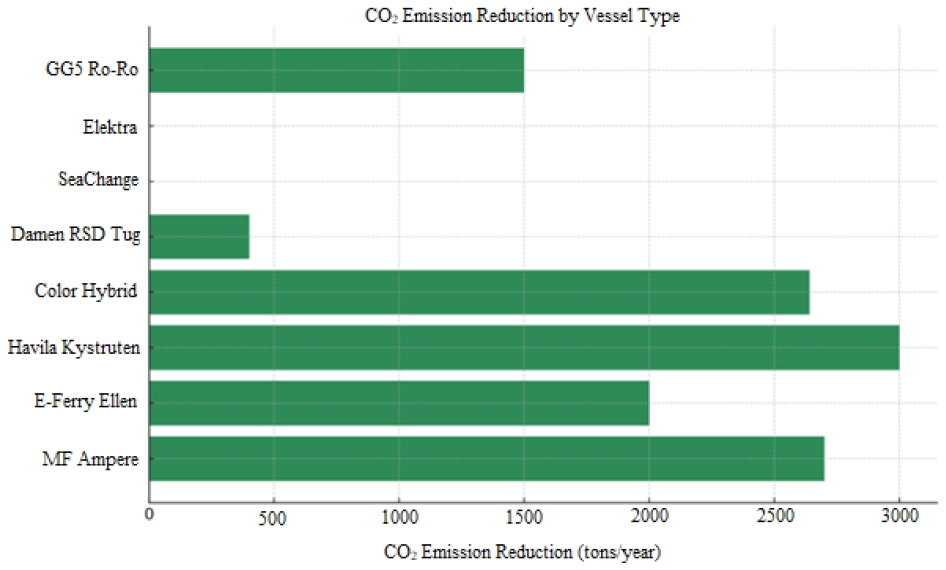
CO₂ emission reduction by vessel type
Among the vessels analyzed, Havila Kystruten demonstrates the highest annual CO₂ reduction, reaching approximately 3000 tons/year, followed closely by MF Ampere (~2700 tons/year) and Color Hybrid (~2600 tons/year). These vessels represent advanced implementations of hybrid propulsion systems and are typically employed in routes or operations with high energy demands, where the transition to electric or hybrid power results in significant emissions savings.
Conversely, vessels such as Elektra and SeaChange show negligible or zero reported CO₂ reductions in this dataset. This may be due to either the recent commissioning of these vessels (limited operational data), smaller operational scopes, or inherently low baseline emissions.
Damen RSD Tug, a hybrid tugboat, contributes modestly with an estimated 400 tons/year of CO₂ reduction, which, while lower in absolute terms, is still notable considering the typical scale and usage profile of such support vessels.
Overall, the data underscores the environmental benefits of hybrid and electric vessel technologies, particularly for high-traffic routes or large-scale vessels, and supports the continued investment in sustainable maritime transport solutions. The variation in performance also emphasizes the importance of matching hybrid technologies to appropriate vessel types and operational scenarios to maximize emissions reductions.
3.2. System Components
Hybrid propulsion systems in maritime applications consist of a series of integrated subsystems, each fulfilling specific functional roles that collectively contribute to the overall performance, efficiency, and environmental sustainability of the vessel. The principal components of these systems are described as follows:
Diesel Generators: Diesel generators act as the primary onboard energy source, particularly under high-load operational conditions such as cruising or offshore transit. They are also utilized to recharge battery systems during periods of low electrical demand. Despite their high energy density and operational reliability, diesel generators are typically operated under controlled regimes due to their associated greenhouse gas and pollutant emissions. Their integration into hybrid systems allows for strategic use only when necessary, thereby minimizing their environmental impact.
Battery Energy Storage Systems (BESS): Most hybrid vessels incorporate lithium-ion (Li-ion) battery technology due to its superior energy density, long cycle life, and rapid charge-discharge capabilities. Battery systems are critical for facilitating zero-emission operation in emission control areas (ECAs), providing supplemental power during peak load demands, and enabling energy recuperation during generator operation. Appropriately sized battery systems also contribute to fuel savings and load leveling, ensuring efficient energy utilization across varying operational scenarios.
Electric Propulsion Motors: Serving as the primary means of propulsion in electric mode, these motors are valued for their high torque output, silent operation, and low maintenance requirements. Their integration significantly reduces mechanical complexity and operational noise, which is particularly beneficial in sensitive marine environments and for enhancing passenger comfort. In addition, the immediate responsiveness of electric motors supports improved maneuverability in confined or congested waterways.
Power Management System (PMS): The PMS governs the real-time distribution and coordination of energy among the different subsystems. Using advanced sensor arrays and adaptive control algorithms, the PMS dynamically adjusts power flows based on vessel operating conditions, energy availability, and predictive load profiles. By optimizing the interaction between diesel generators, batteries, and electric motors, the PMS minimizes fuel consumption, reduces emissions, and improves overall system responsiveness. It serves as the central decision-making unit that ensures seamless integration and intelligent energy allocation within the hybrid architecture.
The seamless integration and coordinated operation of these components are crucial in determining the performance of hybrid systems. During the integration phase, precise engineering—both in software and in hardware—is essential to ensure optimal system performance.
Figure 3 illustrates the fundamental energy flow architecture of a hybrid propulsion system. The diagram depicts the interaction between the diesel generator, battery energy storage, power management system (PMS), and the electric motor that drives the propeller. The diesel generator supplies power through the PMS, which dynamically allocates energy either directly to the electric motor or for charging the battery. The battery, in turn, can discharge to support the electric motor during propulsion, enabling zero-emission operation when required. This configuration demonstrates the coordinated control and bidirectional energy flow essential for efficient hybrid marine propulsion.
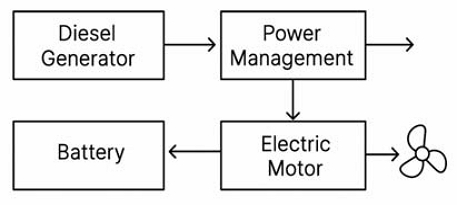
Core components of a hybrid propulsion system
Main components of the hybrid system
The performance and operational reliability of hybrid propulsion systems are highly dependent on the effective integration and control of these components. Engineering precision during both the hardware configuration and software calibration phases is essential to ensure seamless functionality, energy efficiency, and compliance with environmental regulations.
3.3 Operating Modes of Hybrid Propulsion Systems
Hybrid propulsion systems are designed to offer versatile operational flexibility by enabling multiple drive modes that can be dynamically selected based on mission-specific requirements such as energy efficiency, emission targets, fuel economy, and vessel performance. The four principal operating modes are described as follows:
1. Full Electric Mode: In this configuration, the vessel operates exclusively on battery-stored electrical energy, with the electric propulsion motors driving the vessel. This mode is particularly advantageous for low-speed operations, harbor maneuvers, or when operating within Emission Control Areas (ECAs), as it enables completely zero-emission performance and minimizes acoustic and environmental disturbance.
2. Full Diesel Mode: This mode utilizes the diesel generator or main diesel engine as the sole propulsion power source. It is typically engaged during high-speed transit or long-distance offshore operations where continuous high power output is required. While this mode offers operational endurance and performance, it also results in elevated levels of greenhouse gas and pollutant emissions compared to hybrid or electric alternatives.
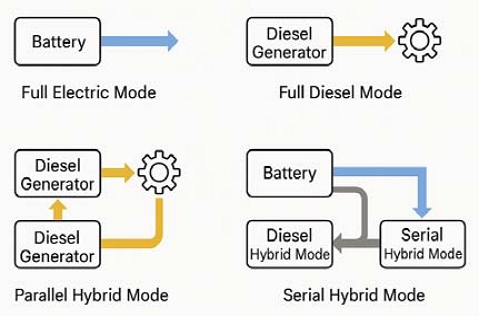
Hybrid system operating modes
3. Parallel Hybrid Mode: In the parallel configuration, both the diesel engine and electric motor are mechanically connected to the propulsion shaft, allowing them to operate simultaneously or independently based on load demands. This mode supports dynamic power sharing: the diesel engine handles high-load scenarios, while the electric motor contributes during low-speed or low-load conditions. This coordinated operation improves fuel economy, enhances overall propulsion efficiency, and reduces engine wear.
4. Series Hybrid Mode: In this setup, the diesel generator is decoupled from the propulsion shaft and is dedicated solely to generating electrical energy. Propulsion is provided exclusively by electric motors powered either directly by the generator or via batteries. The series hybrid mode is particularly effective for operations with frequent load fluctuations, low to medium speed requirements, and scenarios where emission reduction is a priority.
This figure presents a schematic illustration of the energy flow within the hybrid system across different operating modes and their impact on operational requirements. The visual highlights the interaction between energy sources and propulsion elements, effectively illustrating the advantages of each mode in terms of performance and efficiency.
3.4. Carbon Emission Reduction and Alternative Fuels
In response to global decarbonization targets, the maritime industry is increasingly shifting its focus toward the adoption of low-emission and zero-emission alternative fuels. Among the most prominent candidates are liquefied natural gas (LNG), biofuels, and hydrogen, each offering distinct advantages and technical challenges.
Liquefied Natural Gas (LNG) has emerged as a widely Liquefied Natural Gas (LNG) has become a commonly used transitional marine fuel due to its lower carbon content relative to traditional fuels like heavy fuel oil (HFO) and marine diesel oil (MDO). Its use can contribute to notable reductions in carbon dioxide (CO₂) emissions—typically in the range of 20 to 25 percent depending on operating conditions. In addition, LNG combustion produces significantly less sulfur oxides (SOₓ) and nitrogen oxides (NOₓ), helping ships meet the requirements of IMO MARPOL Annex VI and improving air quality in ports and emission control areas.
Biofuels, including biodiesel, bioethanol, and biomethanol, represent renewable alternatives with the potential to achieve meaningful lifecycle emission reductions. Zhang et al. [49] reported that biodiesel usage in marine engines can reduce CO₂ emissions by approximately 10%, depending on feedstock type and blending ratios. Biofuels also benefit from compatibility with existing internal combustion engine infrastructure, requiring minimal retrofitting. However, their large-scale adoption is currently constrained by issues related to feedstock availability, land use competition, production scalability, and economic viability. Ongoing research is directed toward developing advanced biofuels from waste-based or non-food biomass sources, which may overcome these limitations and further improve sustainability metrics.
Hydrogen, particularly when produced via electrolysis using renewable energy (green hydrogen), presents a long-term zero-emission solution for maritime propulsion. While still in early stages of deployment, hydrogen can be utilized in fuel cells or internal combustion engines, offering the advantage of water vapor as the primary emission. However, technical challenges related to hydrogen storage, energy density, safety, and infrastructure development remain significant barriers to widespread maritime integration.
In summary, alternative fuels constitute a critical pathway for reducing greenhouse gas emissions in maritime operations. The selection and optimization of fuel types must be aligned with vessel type, voyage profile, and regional regulatory requirements to maximize both environmental and operational benefits.
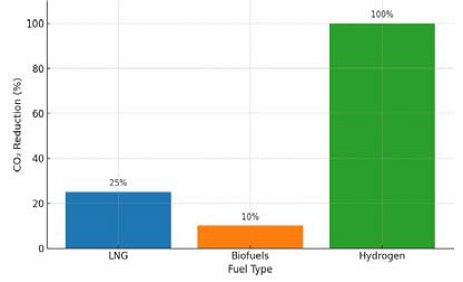
Table 5 summarizes the operational CO₂ emission reduction potentials of three key alternative marine fuels. Liquefied Natural Gas (LNG) offers a moderate reduction of approximately 25%, primarily due to its lower carbon content relative to conventional marine fuels. Biofuels, such as biodiesel, provide a 10% reduction depending on feedstock and blending ratios, offering compatibility with existing engine systems. Green hydrogen exhibits the highest potential—up to 100%—assuming renewable production pathways and zero-emission operation, making it a long-term decarbonization solution for the maritime sector.
Comparative CO₂ emission reduction potential of selected alternative marine fuels
Figure 5 presents a comparative assessment of the CO₂ emission reduction potential of selected alternative marine fuels. LNG offers a moderate reduction of approximately 25%, primarily due to its lower carbon content and clean combustion characteristics. While not a zero-emission fuel, LNG plays a significant role as an interim solution for near-term emission reductions. Biofuels yield a more modest reduction (~10%), yet their renewable origin and engine compatibility render them a practical transition option, especially for retrofitting existing fleets. Green hydrogen stands out with its potential for 100% operational CO₂ elimination, assuming that it is produced from renewable electricity sources and that full lifecycle emissions are accounted for. However, its realization at scale will require substantial advancements in production,
CO₂ emission reduction potential by fuel type (%)
This table and chart collectively highlight the comparative decarbonization impact of major alternative marine fuels. For ship-owners, policymakers, and designers, such visual tools aid in selecting and optimizing fuel options based on vessel type, voyage profile, and regional regulatory frameworks, ultimately guiding toward a more sustainable maritime sector.
Comparative summary of alternative marine fuels
3.5 Carbon Footprint and Environmental Impact Analyses
In the maritime sector, carbon footprint assessment methodologies are designed to quantify environmental impacts with greater precision by utilizing detailed energy consumption and emission datasets. According to Carpentieri et al. [6], incorporating environmental impact evaluations into the ship design process is essential for formulating effective emission reduction strategies and guiding sustainable design decisions.
Carbon Footprint Calculation Methods
1) Fuel Consumption-Based Emission Estimation Method: This method quantifies carbon dioxide (CO₂) emissions by multiplying the amount of fuel consumed with the corresponding emission factor, which is specific to the type of fuel used. It is widely regarded as the most commonly employed approach in maritime emission assessments.
CO₂ Emission (kg) = Fuel Consumption (ton) × Emission Factor (kg CO₂/ton fuel)
Illustrative Example: Consider a container ship operating at full load conditions, with an average daily consumption of 50 tons of Heavy Fuel Oil (HFO). The ship continuously burns this fuel over a 24-hour navigation period. Based on established literature values, the emission factor for HFO is 3,114 kg CO₂ per ton of fuel.
a) To determine the daily CO₂ emissions in kilograms:
b) Converting the result into metric tons:
This calculation underscores the significant carbon footprint associated with high-consumption marine operations and highlights the importance of emission factor selection in evaluating environmental impact.
2) Energy Efficiency Indicators (EEDI and EEOI)
Developed by the International Maritime Organization (IMO), these indicators assess the energy efficiency of ships in both the design and operational stages.
- • EEDI (Energy Efficiency Design Index): Measures the carbon performance of new ship designs.
- • EEOI (Energy Efficiency Operational Indicator): Represents the operational emission intensity.
EEOI Formula:
Example: A bulk carrier ship has the following operational data:
- • The ship carried a total of 20,000 tons of cargo on a single voyage.
- • The total distance traveled during the voyage was 5,000 nautical miles.
- • The total amount of carbon dioxide (CO₂) emitted into the atmosphere during the voyage was measured as 2,000 tons.
a) What is the Energy Efficiency Operational Indicator (EEOI) for this voyage?
b) What is the result in terms of CO₂ per ton·mil, and what does it imply?
c) Is this value considered low or high?
Answer:
a) Cargo-Distance product (tons-miles): 20,000 tons × 5,000 miles = 100,000,000 tons-miles
EEOI Calculation: EEOI = (2000 tons)/(100,000,000 tons·miles) = 0.00002 CO2/ton-miles
b) This unit represents the environmental impact of transporting 1 ton of cargo for 1 nautical mile.
0.00002 tons CO2 = 20 grams CO2 Thus, the ship emits approximately 20 grams of CO₂ into the atmosphere for every ton of cargo it transports for one nautical mile.
c) The generally accepted range for low EEOI values is between 0.00001 and 0.00005 tons CO₂/ton-miles.
The value of 0.00002 indicates excellent energy efficiency and a low carbon footprint.
This value suggests that the ship emits approximately 20 grams of CO₂ for each ton of cargo transported for one nautical mile. In the literature, an EEOI in the range of 0.00001–0.00005 tons CO₂/ton-mile is considered good, indicating high operational efficiency and low environmental impact.
3) Life Cycle Inventory (LCI)
Typical inputs and outputs in the maritime industry:
Inputs:
- • Shipbuilding materials such as steel, aluminum, and composites
- • Fuels such as marine diesel oil, LNG, hydrogen
- • Electricity, water, paint, spare parts
- • Labor, maintenance equipment
Outputs:
- • Carbon dioxide (CO₂), nitrogen oxides (NOₓ), sulfur oxides (SOₓ)
- • Ballast water, bilge water, waste oils
- • Solid waste, scrap metal, paint waste
Example: What are the representative numerical inputs and outputs characterizing each phase of a vessel’s life cycle—namely construction, operation, and dismantling—within the framework of Life Cycle Inventory (LCI) analysis in maritime applications?
Answer:
1. Shipbuilding Phase (Construction Phase)
Duration: 1–2 years
Inputs – Material Consumption:
Steel: ~20,000 tons
Aluminum: ~100 tons
Composites and plastics: ~200 tons
Paint: ~50 tons
Electricity consumption (shipyard): ~1,000 MWh
Water consumption: ~10,000 m³
Labor: ~300,000 man-hours
Outputs – Emissions and Waste:
CO₂ emissions: ~12,000 tons
Solid waste (construction residues): ~500 tons
Paint and solvent waste: ~10 tons
2. Operational Phase
Duration: 25–30 years
Inputs – Fuel and Resource Consumption (annually):
Marine diesel oil (MDO): ~10,000 tons/year
Alternative fuel (e.g., LNG): ~6,000 tons/year (if applicable)
Electricity (for port operations): ~200 MWh/year
Freshwater: ~5,000 m³/year
Spare parts/materials: ~50 tons/year
Outputs – Emissions and Waste (annually):
CO₂: ~31,000 tons/year
NOₓ: ~600 tons/year
SOₓ: ~200 tons/year (depending on fuel type)
Ballast water: ~100,000 m³/year
Bilge water: ~2,000 m³/year
Solid waste (food, plastic, domestic): ~150 tons/year
Waste oils: ~100 tons/year
3. Ship Dismantling Phase (End-of-Life/Disposal Phase)
Duration: 6–12 months
Outputs – Recovery and Waste:
Recovered steel: ~18,000 tons (~90%)
Hazardous waste (asbestos, paint, oil): ~300 tons
Electronic waste: ~20 tons
CO₂ emissions (from dismantling operations): ~2,000 tons
These values may vary significantly depending on the vessel type, size, operational profile, fuel type, and onboard technologies. However, this example provides a representative overview of how LCI can be quantified across the life cycle of a ship.
4) Life Cycle Impact Assessment (LCIA)
In the maritime industry, Life Cycle Impact Assessment (LCIA) is a phase that quantitatively evaluates the potential environmental impacts of a ship or maritime activity throughout its life cycle. This assessment encompasses all stages, from raw material extraction, production, operation, maintenance, and final disposal. LCIA uses life cycle inventory data to produce results in various environmental impact categories, such as global warming, acidification, ozone depletion, and marine pollution. The goal is to scientifically analyze the environmental sustainability of maritime technologies and operations, identifying alternatives that cause the least environmental harm.
Example: A modern eco-friendly passenger ship consumes an average of 30 tons of liquefied natural gas (LNG) per day. LNG has a lower environmental impact, and according to literature, the CO₂ emission factor for LNG is 2,750 kg CO₂ per ton of LNG.
Given:
- • Daily LNG consumption: 30 tons
- • LNG emission factor: 2,750 kg CO₂/ton LNG
Comparison of Average EEOI Values by Ship Type
a) How much CO₂ is emitted by the ship in one day of operation?
b) What is the result when expressed in tons of CO₂/day?
c) If the same amount of HFO had been used, approximately how much CO₂ would have been emitted?
Solution:
a) CO₂ Emission (in kg): 30 tons × 2,750 kg CO2/ton = 82,500 kg CO2
b) Converting to tons: 82,500 kg ÷ 1,000 = 82.5 tons CO2
c) (Comparison with HFO): HFO emission factor: 3,114 kg CO₂/ton
30 tons × 3,114 = 93,420 kg CO2 = 93.42 tons CO2
Result:
• With LNG: 82.5 tons CO₂/day (CO₂ = 30 tons × 2,750 kg CO₂/ton = 82,500 kg CO₂ = 82.5 tons CO₂/day)
• With HFO: 93.42 tons CO₂/day
• Difference: 93.42 - 82.5 = 10.92 tons less CO₂ emission
LNG usage results in approximately 11.7% lower CO₂ emissions per day.
From this comparison, it can be seen that:
- • Passenger ships have the highest carbon footprint due to a large number of passengers and high energy consumption.
- • Container ships have high engine power, which increases the EEOI.
- • Bulk carriers and tankers are generally more efficient.
- • The example ship is as efficient as tankers and bulk carriers, making it suitable for eco-friendly operations.
3.6 Innovative Technologies: Solar and Wind-Assisted Systems
Innovative technologies play a crucial role in reducing the environmental impact of the maritime industry. In recent years, propulsion systems powered by solar and wind energy have shown remarkable developments, particularly in terms of energy efficiency. Solar panels offer an effective solution by meeting a significant portion of a vessel’s electrical energy needs, thereby reducing overall energy consumption. A study conducted in Japan in 2021 reported that a cargo ship equipped with solar panels was able to meet 40% of its electricity demand from solar energy, resulting in a 15% reduction in fuel consumption [26].
Wind-assisted propulsion systems reduce fuel consumption by harnessing natural wind energy while the vessel is underway. A study conducted in 2020 demonstrated that such systems could reduce fuel consumption by up to 20%, particularly on long-distance voyages [25]. These innovative energy support systems have emerged as a key strategy for minimizing fossil fuel use and reducing the environmental footprint of maritime operations.
In this context, various innovative ship projects supported by renewable sources such as solar and wind energy have been developed. Some notable examples are presented below:
1) MS Turanor Planet Solar (Switzerland)
This is the world’s first catamaran-type vessel powered solely by solar energy. It embarked on its maiden voyage in 2010 and completed a full circumnavigation of the globe in 2012 using only solar power. The ship features a solar panel area of 512 m² and a battery capacity of 1.3 MWh. Its average daily energy production is 250 kWh, and it produces zero CO₂ emissions [44]
2) Energy Observer (France)
This hybrid vessel utilizes a combination of solar, wind, and hydrogen energy. Launched in 2017, it is equipped with 202 m² of solar panels, two vertical-axis wind turbines, and an onboard hydrogen production system that performs electrolysis using seawater. With a hydrogen storage capacity of approximately 63 kg, the ship can generate 300–400 kWh of energy per day and achieves an annual CO₂ savings of approximately 33 tons [43].
3) Shofu Maru (Japan – MOL Shipping)
This concept cruise ship is designed to operate using LNG, solar, and wind energy. It features a solar panel area of 6,000 m² and is equipped with 10 small wind turbines. The primary goal of the vessel is to reduce carbon emissions by 40%. The target annual CO₂ reduction is approximately 12,000 tons, and 20% of the ship's total energy needs are expected to be met through renewable sources [35].
4) Peace Boat – Ecoship (Japan – Concept Vessel)
This concept cruise ship is designed to operate using LNG, solar, and wind energy. It features a solar panel area of 6,000 m² and is equipped with 10 small wind turbines. The primary goal of the vessel is to reduce carbon emissions by 40%. The target annual CO₂ reduction is approximately 12,000 tons, and 20% of the ship's total energy needs are expected to be met through renewable sources.
Comparative Summary
These types of vessels are of strategic importance in light of the International Maritime Organization's (IMO) goal to reduce carbon emissions by 50% by the year 2050. Renewable energy systems such as solar and wind not only contribute to environmental sustainability but also play a significant role in reducing operational fuel costs.
4. Hybrid Vessel Applications and Operational Principles
Hybrid propulsion systems, combining multiple power sources such as diesel engines, batteries, fuel cells, or renewable sources, have gained prominence across different vessel types. These systems are optimized based on vessel operational profiles, offering substantial gains in energy efficiency, emissions reduction, and economic performance.
4.1 Passenger Ferries
Short-route ferries with frequent port calls are highly suitable for full-electric or hybrid propulsion due to their predictable schedules and relatively low energy demand. A prominent example is the MF Ampere in Norway, which has already been discussed in detail in the previous sections.
4.2 Tugboats
Tugboats require rapid torque response during maneuvers. Hybrid propulsion systems, particularly parallel configurations, enable operation at optimal engine loads while batteries handle load fluctuations. A representative example of such implementation is the RSD Tug 2513 by Damen, previously discussed in detail.
4.3 Yachts and Luxury Cruise Ships
Yachts and luxury cruise vessels are inherently designed to prioritize passenger comfort, acoustic quietness, and low structural vibration. As previously examined, the integration of hybrid propulsion systems within this vessel category has proven effective in achieving these objectives, offering substantial improvements in fuel efficiency and onboard environmental quality, thereby enhancing both operational performance and user satisfaction.
4.4. Offshore Service Vessels
Offshore service vessels, which frequently operate under low-load or standby conditions for prolonged durations, present a compelling case for hybrid propulsion integration. The application of such systems mitigates the inefficiencies associated with conventional diesel engines during idle operations. Empirical assessments indicate that transitioning to electric-only operation during standby phases yields operational cost reductions in the range of 15–20%, while simultaneously decreasing emission levels and enhancing overall engine performance through more effective load management.
The adoption of hybrid propulsion technologies in the maritime sector has accelerated in response to increasing environmental regulations and the pursuit of operational efficiency. Tailored to the specific energy and performance requirements of different vessel types, hybrid systems offer optimized solutions across a wide operational spectrum. For example, ferries on short, repetitive routes leverage full-electric modes to minimize emissions in port areas; tugboats benefit from high torque flexibility through parallel hybrid configurations; and luxury vessels utilize hybrid modes to enhance onboard comfort and reduce noise. Offshore service vessels, characterized by extended periods of idling, achieve significant fuel savings and emission reductions via electric-only operation. Collectively, these applications support compliance with international decarbonization goals—such as those set by the IMO—while simultaneously improving fuel efficiency, reducing environmental impact, and enhancing vessel performance.
5. Environmental and Economic Analysis
This section presents a comparative evaluation of the environmental and economic performance of hybrid marine propulsion systems relative to conventional diesel-based configurations. The increasing integration of hybrid technologies within the maritime sector reflects a strategic response to the dual objectives of minimizing environmental impact and improving operational efficiency. Empirical studies and scientific assessments consistently highlight the superior performance of hybrid propulsion in terms of energy utilization, emission mitigation, and lifecycle cost reduction, thereby underscoring their potential as a sustainable alternative to traditional propulsion systems.
Fuel and Emission Comparison between Conventional and Hybrid Systems
5.1. Energy and Emissions Comparison
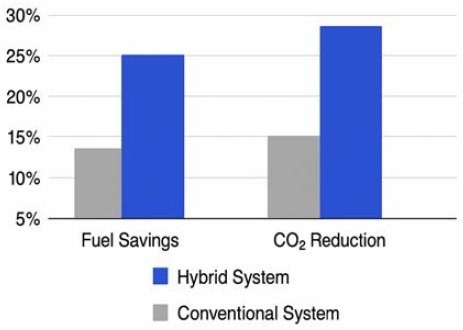
Numerous scientific studies indicate that hybrid propulsion systems can achieve fuel savings in the range of 15% to 25% compared to conventional diesel engines, depending on the vessel’s operational profile and specific operating conditions. These systems demonstrate particular efficiency during low-speed operations—such as harbor maneuvers—where battery-powered propulsion eliminates the need for continuous diesel engine use. This operational flexibility enhances overall energy efficiency while reducing fuel consumption. Additionally, hybrid systems have been shown to lower CO₂ emissions by approximately 20% to 30%, primarily through decreased reliance on fossil fuels. Such reductions underscore the environmental advantages of hybrid propulsion technologies and their alignment with global decarbonization objectives.
This figure visually illustrates the improvements in fuel efficiency and emission reduction provided by hybrid systems over traditional diesel propulsion. The more efficient energy usage of hybrid systems offers an effective solution for reducing the maritime sector's carbon footprint. Additionally, the lower emissions associated with hybrid systems contribute to improved air quality by reducing local air pollution. In this context, the role of hybrid technologies in the maritime industry is critical not only for combating global warming but also for enhancing urban air quality.
5.2. Operational and Investment Costs
Operational Costs: Although hybrid marine propulsion systems entail higher initial capital expenditures, they offer considerable long-term operational savings. One of the most prominent advantages of hybrid systems lies in their reduced fuel consumption, particularly during low-speed operations such as port maneuvers, where battery-assisted propulsion minimizes or eliminates the reliance on diesel engines. Empirical analyses indicate that hybrid configurations can lead to annual fuel cost reductions of up to 20%. In addition to fuel efficiency, hybrid systems contribute to lower maintenance costs by optimizing energy use and reducing mechanical wear. Components such as batteries and power electronics require less frequent servicing compared to conventional machinery, resulting in decreased overall maintenance expenditures.
Investment Costs: The upfront investment required for hybrid propulsion systems is generally higher than that of conventional diesel-based systems, largely due to the cost of advanced battery technologies and energy storage infrastructure. However, this initial financial burden can be justified by the long-term economic and environmental returns. Hybrid systems not only lower operational expenses and improve energy efficiency but also facilitate compliance with increasingly stringent environmental regulations, including international CO₂ emission standards. This compliance yields strategic advantages in markets with rigorous sustainability criteria. Furthermore, government subsidies, tax incentives, and carbon credit mechanisms may significantly offset the initial investment, thereby encouraging broader adoption of hybrid technologies among ship owners.
The comparative analysis clearly indicates that hybrid marine propulsion systems confer substantial environmental and economic benefits over conventional configurations. These systems enable more efficient energy utilization, particularly in low-speed operational scenarios, where battery-assisted propulsion minimizes fuel consumption and associated emissions. Despite their relatively high initial capital costs, hybrid systems demonstrate economic viability over the vessel’s lifecycle through significantly reduced operational and maintenance expenditures.
Economic Comparison between Conventional and Hybrid Systems
The growing integration of hybrid propulsion technologies within the maritime industry represents a critical advancement toward achieving global environmental sustainability targets. Moreover, ongoing technological developments and anticipated reductions in battery and energy storage costs are expected to enhance the competitiveness of hybrid systems, facilitating their wider adoption across various vessel classes and market segments.
6. Future Trends and Technological Directions
6.1. Alternative Fuel-Supported Hybrid Propulsion Systems
In recent years, the development of alternative fuel-supported hybrid systems has gained significant importance in the maritime sector in order to ensure environmental sustainability. These systems aim to minimize greenhouse gas emissions by reducing the use of fossil fuels.
Cost Comparison Table (For a Medium-Sized Vessel – Estimated Annual Values)
Ammonia-Based Hybrid Systems: Ammonia, due to its carbon-free structure, has the potential for zero CO₂ emissions during combustion. Laboratory-scale simulation studies show that ammonia-based systems can achieve emission values 30% to 40% lower than traditional diesel systems. However, safety risks, such as toxicity levels and low ignition temperature, must be integrated into the design process.
Hydrogen-Supported Systems: The combustion of hydrogen only produces water vapor as a byproduct, providing environmental advantages, especially in short-distance transportation and port operations. Energy conversion analysis indicates that hydrogen-supported hybrid systems have the potential to reduce diesel consumption by up to 50%. Challenges, such as low energy density and storage safety, are being addressed through advanced tank technologies and active cooling systems.
LNG-Supported Hybrid Systems: Liquefied natural gas (LNG) is emerging as a significant alternative fuel for long-range maritime transport due to its low sulfur and nitrogen oxide (NOₓ) emissions. LNG-supported hybrid systems are designed to comply with MARPOL Annex VI regulations and contribute to optimizing Energy Efficiency Design Index (EEDI) values.
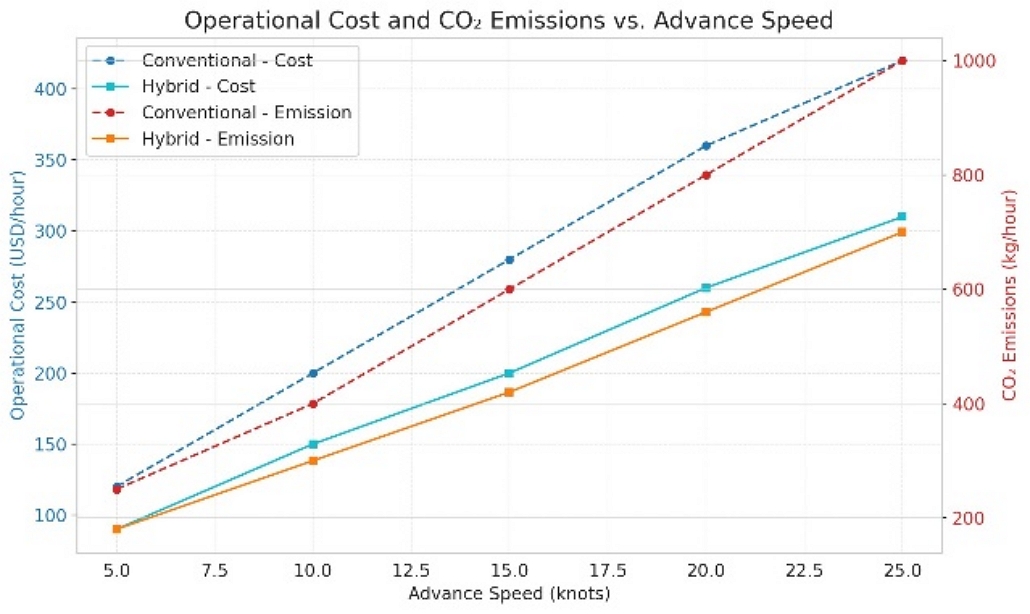
The graph presents in Figure 7 a refined comparison of the cost and emission values of conventional and hybrid ship propulsion systems at various advance speeds. The graph is visually enhanced and suitable for academic and professional presentations.
Cost and emission comparison of hybrid and conventional ship propulsion systems
6.2. Autonomous Hybrid Ship Systems as a Future Trend
The integration of hybrid propulsion systems supported by alternative fuels is expected to be a key component in the future of sustainable maritime transportation. As Artificial Intelligence (AI) and Machine Learning (ML) technologies continue to evolve, these hybrid systems are being enhanced with intelligent control architectures capable of real-time energy optimization, predictive maintenance, and adaptive operational strategies. When combined with alternative energy sources such as hydrogen, ammonia, methanol, or biofuels, hybrid propulsion systems offer a dual advantage: significant reductions in greenhouse gas emissions and improved fuel flexibility across varying voyage profiles.
Preliminary pilot-scale evaluations suggest potential improvements of up to 30% in energy efficiency and reductions in operational emissions, though broader validation under commercial operating conditions is still required. These systems also enable more precise power management through load sharing between combustion-based and electric power units, maximizing energy utilization under different load conditions. Furthermore, they contribute to reducing human error and increasing system autonomy by leveraging AI-driven navigation and control systems.
In the long term, alternative fuel-supported hybrid systems are poised to play a critical role in achieving the International Maritime Organization’s (IMO) decarbonization targets, while setting the foundation for the next generation of autonomous, eco-efficient vessels.
6.3. Design Strategies Compliant with New Regulations
In response to the increasingly stringent environmental regulations introduced by the International Maritime Organization (IMO) following 2023, ship design methodologies are undergoing a fundamental transformation. A central focus of this shift is compliance with the revised Energy Efficiency Design Index (EEDI) thresholds and the mandatory enhancement of the Ship Energy Efficiency Management Plan (SEEMP). These regulatory developments are catalyzing a new era in naval architecture, characterized by the integration of sustainability-oriented design strategies.
Key technological directions include the adoption of energy recovery systems (e.g., waste heat recovery and regenerative braking), the development of low-resistance hull forms optimized through Computational Fluid Dynamics (CFD), and the deployment of integrated digital energy management platforms that facilitate real-time monitoring and control of fuel consumption and emissions. These innovations aim to not only meet regulatory benchmarks but also improve the overall energy performance and operational economics of vessels.
Moreover, future-ready design frameworks increasingly rely on multi-objective optimization approaches, where parameters such as fuel type adaptability, propulsion efficiency, and lifecycle carbon footprint are co-optimized. As regulatory pressure continues to intensify in alignment with IMO’s decarbonization targets (e.g., GHG Strategy 2050), these advanced design strategies are expected to become foundational pillars in both commercial shipbuilding and research-driven concept development.
6.4 Integration of Electric Charging Infrastructure at Ports: A Research, Development, and Further Investigation Perspective
The accelerating shift toward electric propulsion systems in maritime transport underscores the critical need for integrating high-capacity charging infrastructure within port environments. Initial pilot implementations have revealed that megawatt-scale (MW-level) charging systems can reduce vessel battery charging durations by up to 50%, thereby enhancing port turnaround efficiency and supporting emission reduction strategies. Moreover, these systems play a pivotal role in improving ambient air quality by eliminating emissions from conventional auxiliary power units during berthing operations.
From a research and development perspective, significant efforts are being directed toward the optimization of ship-to-shore power exchange mechanisms. These include intelligent load management strategies, real-time demand-response algorithms, and compatibility with emerging smart grid technologies to ensure stability, scalability, and resilience of port energy systems.
Further investigation is essential to address current limitations in charging standardization, interoperability across vessel types, and the long-term impacts of high frequency fast charging on battery degradation. Additionally, comprehensive techno-economic analyses and environmental impact assessments are required to guide policy frameworks and investment strategies. Future research should also explore the integration of renewable energy sources and energy storage systems into port infrastructure to create fully sustainable and self-regulating energy ecosystems capable of meeting the growing demands of electrified maritime operations.
6.5 Battery Weight and Thermal Management Systems in Ship Design: Engineering Challenges, Research and Development Priorities, and Future Directions
The integration of high-capacity battery systems into modern ship designs presents a series of complex engineering challenges, primarily related to the impact of battery mass on vessel stability and overall performance. Strategic placement of battery modules in alignment with the ship's center of gravity is essential to maintaining dynamic stability, particularly under varying load conditions. Advanced liquid-based thermal management systems are equally critical, as they enable precise temperature control, mitigate thermal runaway risks, and enhance both safety and operational lifespan of battery systems.
Recent numerical simulations and parametric modeling studies indicate that such optimizations can improve energy recovery efficiency by approximately 10% to 15%, contributing to overall system effectiveness. From a research and development standpoint, continued investigation into lightweight, high-energy-density battery chemistries and adaptive thermal management technologies remains a priority. Emerging techniques such as phase-change materials, integrated cooling channels, and predictive heat-load modeling represent promising avenues for future innovation.
Case studies, coupled with comprehensive environmental and techno-economic assessments, underscore the transformative potential of hybrid propulsion technologies in maritime applications. Scientifically validated findings confirm that hybrid systems can deliver substantial reductions in fuel consumption, greenhouse gas emissions, and underwater radiated noise compared to conventional diesel-based propulsion.
Despite high upfront capital expenditure, long-term operational cost savings and environmental benefits demonstrate the economic viability and sustainability of these systems. Further investigation is warranted in several domains, including the integration of next-generation alternative fuels (e.g., hydrogen, ammonia), the deployment of autonomous energy management systems, and the advancement of port-side energy infrastructure. Collectively, these research trajectories will accelerate the adoption of hybrid maritime technologies and foster the transition toward a decarbonized, intelligent, and resilient shipping industry.
6.6. Design Recommendations: Optimizing Battery Placement and Cooling Systems in Marine Applications
The integration of battery systems into electric and hybrid propulsion vessels necessitates a multidisciplinary engineering approach to address structural integrity, thermal regulation, and operational reliability. Proper placement of battery modules is not merely a spatial consideration but a critical factor influencing vessel stability, structural stress distribution, and safety under dynamic loading conditions. From a structural engineering perspective, battery integration must align with the vessel's load-bearing framework and center of gravity to prevent adverse effects on seakeeping performance and maneuverability.
Equally important is the implementation of advanced thermal management systems capable of maintaining optimal operating temperatures across a range of environmental and load conditions. Liquid-cooled systems, phase-change technologies, and intelligent thermal feedback controls are currently at the forefront of research and development. These technologies not only enhance battery performance and longevity but also mitigate thermal runaway risks, thus contributing to onboard safety and regulatory compliance.
Design recommendations emerging from recent experimental and computational studies highlight the necessity of system-level co-optimization—where battery placement, cooling efficiency, and ship architecture are evaluated in a coupled framework. Further investigation is warranted into adaptive thermal management systems that respond in real time to varying operational demands, as well as into novel materials and structural configurations that support lightweight, compact battery housing.
Ongoing R&D efforts should also address standardization challenges, lifecycle assessment methodologies, and integration with digital twin frameworks to enable predictive maintenance and operational optimization. Such developments will be instrumental in advancing the scalability, safety, and sustainability of next-generation electric and hybrid maritime propulsion systems.
7. Discussion: Hybrid Propulsion Systems in Maritime Transport — Scientific Evidence, R&D Priorities, and Future Directions
The studies evaluated in this research, supported by environmental performance indicators and comprehensive economic analyses, underscore the transformative potential of hybrid propulsion technologies within the maritime sector. Both empirical data and theoretical investigations in the existing literature confirm the technical viability and economic feasibility of hybrid propulsion systems, particularly in short- and medium-range maritime operations [41][25]. These findings align with the global agenda for maritime decarbonization and sustainable transport.
Scientific assessments consistently indicate that hybrid propulsion systems offer fuel savings in the range of 15% to 30% relative to conventional diesel-based propulsion, while simultaneously achieving significant reductions in greenhouse gas emissions (CO₂) and air pollutants such as nitrogen oxides (NOₓ) and sulfur oxides (SOₓ). Moreover, the integration of energy recovery mechanisms, intelligent load distribution algorithms, and battery-supported operational strategies significantly enhances overall system efficiency—especially under conditions of port maneuvering and low-speed navigation. Additionally, the reduction of underwater-radiated noise associated with hybrid systems presents further benefits for marine ecosystems and occupational safety onboard.
Despite these advantages, several structural and economic barriers continue to hinder large-scale deployment. Chief among these is the elevated capital expenditure required for system installation, including battery modules, thermal regulation infrastructure, power electronics, and advanced energy management software—often exceeding the cost of conventional systems by 25% to 40%. Nonetheless, life cycle cost (LCC) analyses demonstrate that these investments yield favorable economic returns within 5 to 8 years, with potential long-term operational savings approaching 20%, thereby enhancing economic resilience and sustainability [23].
From a research and development standpoint, future efforts must address the integration of hybrid systems with alternative carbon-neutral fuels such as hydrogen, ammonia, and liquefied natural gas (LNG). Furthermore, the role of artificial intelligence and autonomous control systems in optimizing energy consumption, load scheduling, and route planning requires in-depth investigation. Equally critical is the expansion and standardization of shore-based charging infrastructure and cold ironing systems, which are instrumental to the widespread operational viability of hybrid vessels.
Further investigation is also warranted into material science innovations for lightweight energy storage systems, modular propulsion architectures, and hybridization strategies tailored for various vessel types. Moreover, policy development, fiscal incentives, and green financing models must be harmonized with technological innovation to support adoption at scale.
In summary, hybrid propulsion technologies represent a scientifically validated and economically viable solution for advancing maritime sustainability. However, their long-term success depends on a synergistic approach encompassing advanced R&D, policy innovation, port infrastructure modernization, and strategic investment mechanisms aimed at facilitating a systemic transition to carbon-neutral maritime transport.
8. Conclusion
This study has the above graph presents a refined comparison of the cost and emission values of conventional and hybrid ship propulsion systems at various advance speeds. The graph is visually enhanced and suitable for academic and professional presentations. Extensive literature analyses and validated case studies, the research has demonstrated that hybrid propulsion technologies offer compelling quantitative and qualitative advantages over conventional diesel-based systems, thereby positioning themselves as a cornerstone of next-generation maritime operations.
The findings substantiate that hybrid systems can yield fuel consumption reductions in the range of 20% to 40%, while markedly decreasing critical emissions such as carbon dioxide (CO₂), nitrogen oxides (NOₓ), and other air pollutants. Moreover, their capacity to significantly reduce acoustic noise levels contributes positively to both marine ecosystems and occupational health, reinforcing the multidimensional sustainability of these systems. In particular, battery-assisted electric propulsion configurations emerge as optimal zero-emission solutions for short-distance routes, whereas the integration of alternative fuels—such as LNG, hydrogen, and ammonia—ensures environmental compliance and extended range capabilities for ocean-going vessels.
Emerging technological trends indicate that the integration of autonomous energy management platforms, AI-driven route optimization tools, and high-efficiency thermal management systems will be pivotal in scaling up hybrid systems. Simultaneously, the evolution of port infrastructure through electrification and the standardization of shore power connections (e.g., cold ironing) will serve as critical enablers for operational implementation. Furthermore, international regulatory instruments—such as the IMO’s Energy Efficiency Design Index (EEDI) and Ship Energy Efficiency Management Plan (SEEMP)—are anticipated to accelerate the mainstream adoption of hybrid propulsion architectures across the global fleet.
The study further emphasizes that hybrid propulsion systems transcend their role as fuel-saving mechanisms; rather, they represent advanced engineering solutions for integrated, digitalized, and sustainable energy management in maritime environments. Through thoughtful placement of battery modules, structural harmonization within ship architecture, implementation of advanced safety systems, and optimized thermal regulation, hybrid systems offer a systemic solution aligned with the maritime sector’s decarbonization imperatives.
In sum, hybrid propulsion technologies provide a scientifically validated, engineering-grounded pathway toward sustainable, efficient, and low-emission maritime transportation. For shipowners and operators seeking to comply with rigorous environmental standards while ensuring long-term economic competitiveness, these systems stand out as an essential component of the future maritime paradigm. Ongoing and future research into real-time performance diagnostics, next-generation battery materials, and resilient alternative fuel supply chains will be instrumental in refining the capabilities and accelerating the sector-wide deployment of these systems.
Accordingly, hybrid propulsion technologies are not merely transitional innovations but foundational pillars in the design and operation of environmentally responsive, future-ready maritime vessels.
Acknowledgments
I would like to thank Istanbul Beykent University, Faculty of Engineering and Architecture, Dean's Office for their support.
Author Contributions
Conceptualization, A. Kükner; Methodology, A. Kükner; Software, A. Kükner; Formal Analysis, A. Kükner; Investigation, A. Kükner; Resources, A. Kükner; Data Curation A. Kükner; Writing-Original Draft Preparation, A. Kükner; Writing-Review & Editing, A. Kükner; Visualization, A. Kükner; Supervision, A. Kükner; Project Administration, A. Kükner; Funding Acquisition, A. Kükner.
References
- A. Habibic, “Germany welcomes 1st emission-free hydrogen-fueled push boat,” Offshore Energy, 2021.
-
A. F. Molland, S. R. Turnock, and D. A. Hudson, Ship Resistance and Propulsion: Practical Estimation of Ship Propulsive Power, Cambridge: Cambridge University Press, 2011.
[https://doi.org/10.1017/CBO9780511974113]

- JT van den Akker, Carbon Capture Onboard LNG-Fueled Vessels, A Feasibility Study, Master of Science Thesis, Department of Mechanical Engineering, Delft University of Technology, Netherlands, 2017.
- A. Yıldırım, S. Özbey, and İ. Tıknız, “Environmental impact in maritime transportation: An analysis of the relationship between container port volumes and carbon emissions,” Journal of Maritime Research: Amphora, vol. 3, no. 6, pp. 117–140, 2024 (in Turkish).
-
C. -C. Chang, M. -L. Huang, and C. -H. Li, “Analysis of emission reduction strategies for the use of alternative fuels and natural carbon sinks in international bulk shipping,” Energy Conversion Management: X, vol. 24, 100702, 2024.
[https://doi.org/10.1016/j.ecmx.2024.100702]
- C. Dere, Energy Efficiency Oriented Model Based Investigation of Marine Diesel Engine and Auxiliary Systems. Ph. D. dissertation, Istanbul Technical University, Turkey, 2021.
-
C. Andersson, A. T. Johansson, A. Genell, and J. Winroth, “Fully electric ship propulsion reduces airborne noise but not underwater noise,” Ocean Engineering, vol. 302, 117616, 2024.
[https://doi.org/10.1016/j.oceaneng.2024.117616]
-
C. Sui, P. de Vos, D. Stapersma, K. Visser, and Y. Ding, “Fuel consumption and emissions of ocean-going cargo ship with hybrid propulsion and different fuels over voyage,” Journal of Marine Science and Engineering, vol. 8, no. 8, 588, 2020.
[https://doi.org/10.3390/jmse8080588]
- Corvus Energy, MF Ampere - World´s first fully electric ferry sailing for over 10 years. [Online]. Available: https://corvusenergy.com/sucess-stories/mf-ampere-world-s-first-fully-electric-ferry-sailing-for-over-10-years?
-
M. Chen, J. Liu, Q. Si, Y. Liang, Z. Jin, and J. Yuan, “Investigation into the hydrodynamic noise characteristics of electric ducted propeller,” Journal of Marine Science and Engineering, vol. 10, no. 3, 378, 2022.
[https://doi.org/10.3390/jmse10030378]
- Damen Shipyards, RSD Tug 2513 Product Sheet. [Online]. Available: https://www.damen.com/vessels/tugs/electric-tugs/rsd-tug-2513-electric?
- DNV, DNV Handbook for Maritime and Offshore Battery Systems, Available: https://www.dnv.com/maritime/publications/maritime-and-offshore-battery-systems-download/
- DNV, Color Hybrid: The World’s Largest Plug-in Hybrid Vessel. DNV Maritime Reports, 2020.
- DNV, Maritime Forecast to 2050: Energy Transition Outlook. DNV, 2023.
-
F. Baldi, F. Ahlgren, T. ‑V. Nguyen, M. Thern, and K. Andersson, “Energy and exergy analysis of a cruise ship,” Energies, vol. 11, no. 10, 2508, 2018.
[https://doi.org/10.3390/en11102508]
-
F. Baldi, F. Ahlgren, F. Melino, C. Gabrielii, and K. Andersson, “Optimal load allocation of complex ship power plants,” Energy Conversion and Management, vol. 124, pp. 344-356, 2016.
[https://doi.org/10.1016/j.enconman.2016.07.009]
- Golden Gate Zero Emission Marine, SeaChange hydrogen ferry project overview, 2021.
- Grimaldi Group, GG5G, Class of Hybrid Eco-friendly vessels, 2025.
- Havila Voyages, Sustainable coastal cruising. [Online]. Available: https://www.havilavoyages.com/about-havila/media/sail-the-norwegian-fjords-the-green-way?
- Hurtigruten, Sea Zero. [Online]. Available: https://www.hurtigruten.com/en/about-us/sustainability/sea-zero
- IMO, International Maritime Organization, Fourth IMO GHG Study, International Maritime Organization, 2020. Available: https://www.imo.org/en/ourwork/environment/pages/fourth-imo-greenhouse-gas-study-2020.aspx
- IMO, Initial IMO Strategy on Reduction of GHG Emissions from Ships, 2018.
- IMO, IMO 2023 GHG Reduction Strategy, 2023.
- IPCC, Default CO₂ emission factors for marine fuels, 2006/2019.
-
K. Wang, Z. Li, X. Liu, Z. Hu, L. Huang, Q. Song, H. L., and X. Jian, “Wind-assisted propulsion system for shipping decarbonization: Technologies, applications and challenges,” Energy, vol. 336, 138420, 2025.
[https://doi.org/10.1016/j.energy.2025.138420]
-
L. G. Rodríguez, L. Castro-Santos, and M. I. L. Galdo, “Feasibility and limitations of solar energy integration in merchant ships,” Journal of Marine Science and Engineering, vol. 13, no. 5, 991, 2025.
[https://doi.org/10.3390/jmse13050991]
-
L. Maloberti and R. Zaccone, “An environmentally sustainable energy management strategy for marine hybrid propulsion,” Energy, vol. 316, 134517, 2025.
[https://doi.org/10.1016/j.energy.2025.134517]
-
M. Acciaro, H. Ghiara, and M. I. Cusano, “Energy management in seaports: a new role for port authorities,” Energy Policy, vol. 71, pp. 4–12, 2014.
[https://doi.org/10.1016/j.enpol.2014.04.013]
-
S. E. Damian, L. A, Wong, H. Shareef, V. K. Ramachandaramurthy, C. K. Chan, T. S. Y. Moh, and M. C. Tiong,” Review on the challenges of hybrid propulsion system in marine transport system,” Journal of Energy Storage, vol. 56, Part B, 105983, 2022.
[https://doi.org/10.1016/j.est.2022.105983]
-
G. Radica, T. Vidović, J. Šimunović, and Z. Jurić, “Overview of hybrid marine energy system configurations and system component modeling approaches,” Energies, vol. 18, no. 5, 1189, 2025.
[https://doi.org/10.3390/en18051189]
- M. Stopford, Coronavirus, Climate Change & Smart Shipping – Three Maritime Scenarios 2020–2050, White Paper, 2020.
-
M. -C. Chiong, H. -S. Kang, N. M. R. Shaharuddin, S. Mat, L. K. Quen, K. -H. Ten, and M. C. Ong, “Challenges and opportunities of marine propulsion with alternative fuels,” Renewable and Sustainable Energy Review, vol. 149, 111397, 2021.
[https://doi.org/10.1016/j.rser.2021.111397]
- M. Yeşim, F. Yahya, and A. Nagehan, “A study on carbon emissions from merchant ships,” Journal of Economy Business and Management, vol. 5, no. 2, pp. 223–242, 2023 (in Turkish).
- MAN Energy Solutions, Hybrid Propulsion Systems for Marine Applications, 2020.
- MOL, “Finances second ship through transition-linked loans – SHOFU MARU,” 2022. Available: https://www.mol.co.jp/en/pr/2022/22111.html?utm_source=chatgpt.com
-
O. B. Inal, J. -F. Charpentier, and C. Deniz, “Hybrid power and propulsion systems for ships: Current status and future challenges,” Renewable and Sustainable Energy Reviews, vol. 156, 111965, 2022.
[https://doi.org/10.1016/j.rser.2021.111965]
- Ø. Buhaug, et al., Second IMO GHG Study. IMO, 2009. Available: https://www.researchgate.net/publication/255890936_Second_IMO_Greenhouse_Gas_Study_2009
- Horizon 2020 CORDIS - EU research results, “E-ferry – prototype and full-scale demonstration of next generation 100% electrically powered ferry for passengers and vehicles,” Available: https://cordis.europa.eu/project/id/636027, .
-
R. A. Halim, et al., “Decarbonization pathways for international maritime transport: A model-based policy impact assessment,” Sustainability, vol. 10, no. 7, 2243, 2018.
[https://doi.org/10.3390/su10072243]
-
S. Brynolf, E. Fridell, and K. Andersson, “Environmental assessment of marine fuels: liquefied natural gas, liquefied biogas, methanol and bio-methanol,” Journal of Cleaner Production, vol. 74, pp. 86–95, 2014.
[https://doi.org/10.1016/j.jclepro.2014.03.052]
- T. Kozian and A. John, Eds., Electric Ferries in the Baltic Sea Region Compendium. ATI Küste GmbH, 2020.
- V. Thapar, “Indian Navy takes a big leap towards electric propulsion of warships,” Indian Defense News, 2019.
- Wikipedia, Energy Observer (France). [Online]. Available: https://en.wikipedia.org/wiki/Energy_Observer
- Wikipedia, MS Turanor Planet Solar (Switzerland). [Online]. Available: https://de.wikipedia.org/wiki/T%C3%BBranor_PlanetSolar
-
Y. Ge, J. Zhang, K. Zhou, J. Zhu, and Y. Wang, “Research on energy management for ship hybrid power system based on adaptive equivalent consumption minimization strategy,” Journal of Marine Science and Engineering, vol. 11, no. 7, 1271, 2023.
[https://doi.org/10.3390/jmse11071271]
-
Y. Li, X. Liu, Y. Zhao, T. He, and H. Zeng, “Optimization design of hybrid energy storage capacity for electric ship,” Energy Reports, vol. 11, pp. 887–894, 2024.
[https://doi.org/10.1016/j.egyr.2023.12.049]
-
Y. Millet, Y. Fidan, and S. Öz, “Effect of fuel type on maritime transportation's pollution: An EEOI application,” ÖHÜ İİBF Dergisi, vol. 16, no. 1, pp. 66–78, 2023.
[https://doi.org/10.25287/ohuiibf.1087108]
-
Y. Yuan, J. Wang, X. Yan, S. Boyan, and T. Long, “A review of multi-energy hybrid power systems for ships,” Renewable and Sustainable Energy Reviews, vol. 132, 2020.
[https://doi.org/10.1016/j.rser.2020.110081]
-
Z. Zhang, J. Lv, W. Li, J. Long, S. Wang, D. Tan and Z. Yin, “Performance and emission evaluation of a marine diesel engine fueled with natural gas ignited by biodiesel-diesel blended fuel,” Energy, vol. 256, 124662, 2022.
[https://doi.org/10.1016/j.energy.2022.124662]
-
Z. Zhang, J. Tian, G. Xie, J. Li, W. Xu, F. Jiang, and D. Tan, “Investigation on the combustion and emission characteristics of diesel engine fueled with diesel/methanol/n-butanol blends,” Fuel, vol. 314, art. no. 123088, 2022.
[https://doi.org/10.1016/j.fuel.2021.123088]